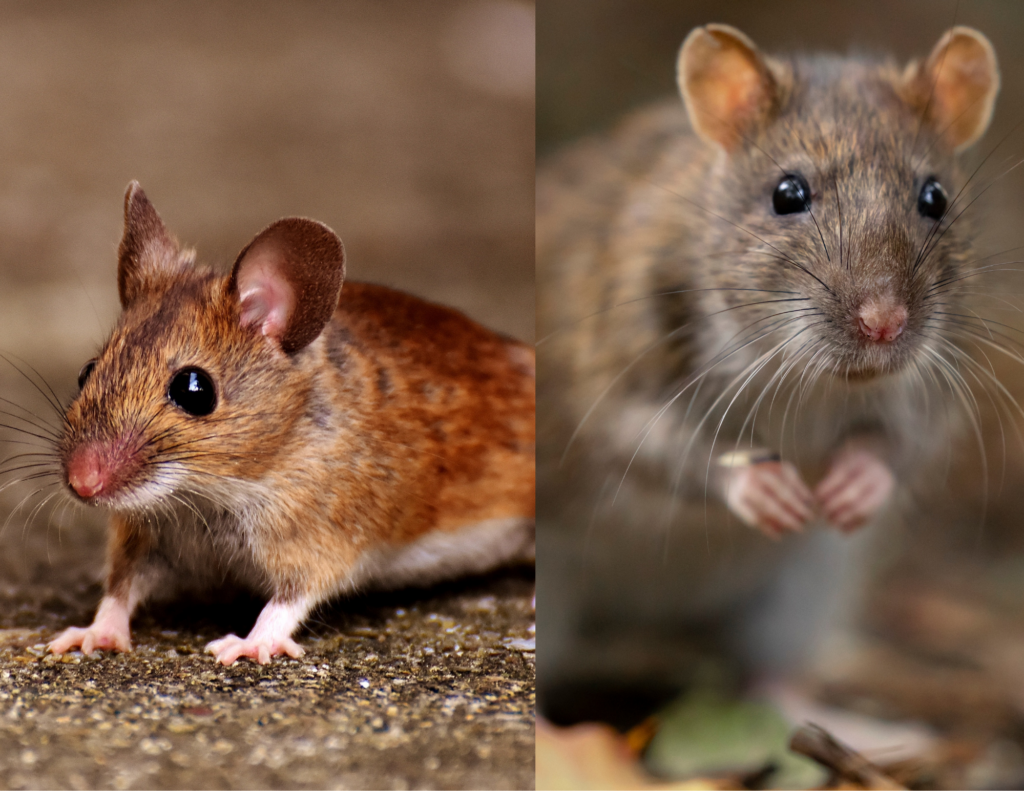
As winter temperatures settle into the Raleigh–Durham area, many homeowners begin noticing a frustrating and sometimes alarming problem: rodents showing up indoors, particularly mice and rats indoors. Scratching noises inside the walls, droppings in garages or pantries, and unexpected encounters with mice or rats indoors are extremely common during the colder months.
At Innovative Pest Solutions, winter consistently marks our busiest season for rodent control. When outdoor conditions become less favorable, rodents shift their focus to survival. Homes provide warmth, shelter from the elements, and access to food, making them an ideal environment for mice and rats looking to escape cold and wet weather.
Understanding why rodents move inside during winter, which species are most common in Raleigh, and how infestations begin can help homeowners act quickly before a small issue becomes a much larger problem.
Why Rodents Invade Homes in Winter
Rodents remain active throughout the year and do not hibernate. As winter approaches, food sources outdoors become limited and exposure to cold temperatures increases stress on rodent populations. In response, mice and rats seek out environments that offer consistent warmth, protection from moisture, and reliable food sources, often leading them to invade homes and be seen as mice and rats indoors. This makes it essential for homeowners to take proactive measures to prevent infestations and keep their homes free of mice and rats indoors.
Homes naturally meet all of these needs. Wall voids, crawlspaces, attics, and insulation provide protected nesting areas that are rarely disturbed. Even homes that appear clean and well maintained still offer rodents access to crumbs, stored food, pet food, and water sources. Once a rodent discovers a suitable entry point, it rarely leaves and instead begins to establish a nesting area inside the structure.
Winter rodent activity often goes unnoticed at first because rodents tend to stay hidden inside walls or crawlspaces. By the time visible signs appear, the infestation has often been active for weeks or even months.
The Most Common Winter Rodents in Raleigh
While people often lump all rodents together, not all rats and mice behave the same way. In the Raleigh area, we consistently see two main offenders: House Mice and Norway Rats.
House Mice

House mice are by far the most common winter rodent we encounter. Their small size allows them to enter homes through extremely small openings, sometimes no larger than a quarter of an inch. This makes even newer homes vulnerable if small gaps exist around doors, utility lines, or crawlspace openings.
Once inside, mice reproduce quickly and tend to nest close to food and heat sources. Wall voids, attics, insulation, garages, and areas behind appliances are all common nesting locations. Because mice are primarily active at night, homeowners often hear scratching or rustling sounds before ever seeing a mouse.
Signs of a mouse infestation typically include small droppings, gnaw marks on food packaging or wiring, and faint odors in enclosed areas. Mice frequently chew on electrical wires, which can pose a serious fire risk. Because their presence often remains hidden, mouse populations can grow rapidly if the issue is not addressed early. More information about House Mice.
Norway Rats
In Raleigh, Norway rats are the primary rat species we deal with—not roof rats.
This is an important distinction.
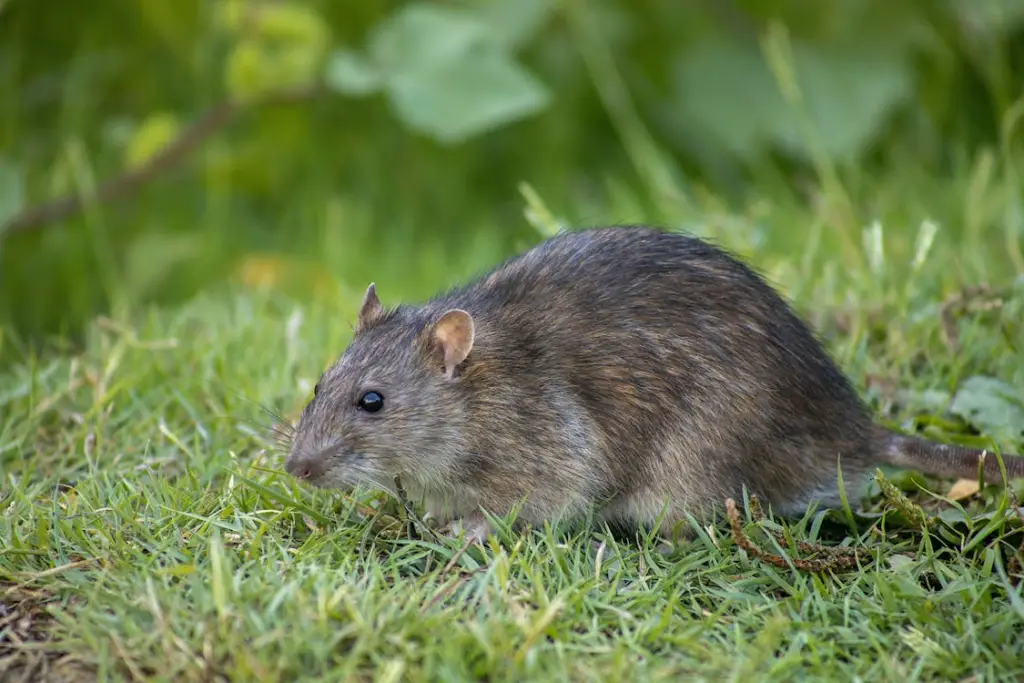
Norway rats prefer to live at ground level and are excellent diggers. Rather than nesting in attics or trees, they create extensive burrow systems in soil. These burrows are commonly found along foundations, near HVAC pads, under decks, and beneath concrete slabs. Burrowing allows rats to live close to homes while remaining concealed from view.
As burrow systems expand, rats often gain access to crawlspaces, basements, or slab gaps. Once inside, they can cause significant damage by chewing through materials, contaminating surfaces, and damaging insulation. Norway rats are larger and stronger than mice, which allows them to cause noticeable destruction in a short amount of time.
Homeowners often first notice Norway rat activity through disturbed soil near the foundation, larger droppings, grease marks along walls, or loud noises coming from crawlspaces or wall voids. These signs should never be ignored, as Norway rat infestations tend to worsen quickly. More information about Norway Rats.
What About Roof Rats?
Roof rats are common in warmer, coastal regions but are not frequently encountered in Raleigh. These rats prefer elevated nesting areas such as trees and attics and typically access homes from above. In our service area, winter rat activity almost always involves Norway rats entering from ground level rather than roof rats entering from trees.
This distinction is important because treating a roof rat problem requires a different strategy than addressing a Norway rat infestation. Misidentifying the species can lead to ineffective control efforts and prolonged issues.
Why Winter Infestations Can Get Worse Fast
Once rodents gain access to a home, they do not leave on their own. Instead, they establish nesting areas and continue reproducing as long as food and shelter remain available. During winter, rodents tend to stay hidden, which allows populations to grow without immediate detection.
Rodents can cause extensive damage by chewing electrical wiring, contaminating food and surfaces, damaging insulation, and spreading bacteria and parasites. Because winter infestations often remain out of sight, many homeowners do not realize the severity of the problem until warmer months arrive and rodent activity becomes more visible.
Addressing rodent issues early in the winter can prevent costly repairs and extensive infestations later in the year.
Common Entry Points We Find During Inspections
At Innovative Pest Solutions, winter rodent inspections often reveal:
- Gaps at crawlspace doors
- Cracks in foundation walls
- Utility penetrations not properly sealed
- Damaged or loose vents
- Garage door gaps
- Soil erosion exposing foundation openings
For Norway rats, burrowing around the foundation is one of the biggest risk factors. If the soil is disturbed or collapsing near your home, it’s a red flag.
How to Prevent Winter Rodents
Here are practical steps homeowners can take:
✔ Seal Entry Points
Rodent-proofing is the most important step. This includes:
- Sealing cracks and gaps
- Installing proper vent covers
- Addressing crawlspace access issues
✔ Eliminate Food Sources
- Store pet food in sealed containers
- Avoid leaving bird seed near the home
- Secure trash cans tightly
✔ Reduce Harborage
- Trim vegetation away from the foundation
- Remove debris and woodpiles near the house
- Address standing water and drainage issues
✔ Address Burrowing Early
If you see burrows around your foundation, don’t ignore them. Norway rats rarely leave on their own.
How Innovative Pest Solutions Handles Rodents
Effective rodent control involves far more than simply setting traps. Proper identification, thorough inspection, and long-term prevention are essential for success. At Innovative Pest Solutions, our approach focuses on understanding rodent behavior, identifying entry points, and addressing conditions that allow infestations to persist.
By combining targeted control methods with exclusion recommendations and ongoing monitoring, we help homeowners resolve rodent issues and reduce the likelihood of future problems. For more questions visit our website or call us today at (919) 847-6267
Don’t Wait Until Spring
Rodents that enter homes during winter often remain long after temperatures rise, continuing to reproduce and cause damage. Early intervention is the most effective way to limit destruction and protect your home.
If you are hearing noises in the walls, noticing droppings, or seeing disturbed soil around your foundation, it is important to act sooner rather than later. A professional inspection can identify the source of the problem and help prevent a small issue from becoming a long-term infestation.
Contact Innovative Pest Solutions today for a professional rodent inspection and let us help protect your home this winter.
To stay up to date on Innovative Pest Solutions, follow us on social media and join our groups!
Instagram: @innovativepest
Facebook: @Innovative Pest Solutions, Inc.
Nextdoor: Innovative Pest Solutions Inc
Website: Innovativepest.com
Phone: (919) 847-6267